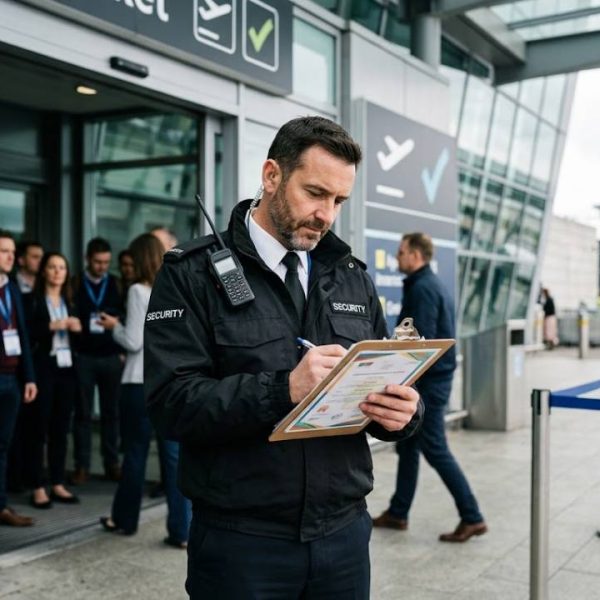
The front desk of an office, hotel or hospital is often the first place where languages meet. A security guard there may greet a visitor in English, answer a delivery driver in Spanish and calm a confused tourist in a third language, all within ten minutes. Clear communication is not an extra skill in this job. It is part of safety.
Why Language Matters for Security
Security work depends on quick, accurate exchanges. A guard must check identity, explain rules, give directions and respond to incidents. When the visitor does not understand, small problems grow into frustration or risk.
In an emergency, a misunderstood instruction can cost seconds that matter. Good security is as much about clear words as it is about cameras and locks.
Common Situations With Multilingual Visitors
Typical moments include signing in at reception, collecting a delivery, entering a restricted area or evacuating during a drill. Each requires the same message to be understood by everyone, regardless of their first language.
Events and conferences add complexity. Thousands of guests arrive at once, many with limited English, and guards need to give simple, repeatable instructions at the gate.
Simple Techniques That Work
Short sentences, a calm voice and a friendly face help immediately. Avoid slang and idioms, point to signs or maps and use gestures that are universal, such as a hand held up for stop. Confirm understanding by asking the visitor to repeat the key instruction in their own words.
Keep a small card with the ten most useful phrases in the main local languages. Greeting, please wait, show your ID and exit this way cover a surprising range of situations.
Signs, Badges and Printed Rules
Written information should be consistent and easy to read. Visitor rules, evacuation plans and warning signs benefit from clear icons and short text in the languages most common among your visitors. Poorly translated safety signs can create confusion or even legal problems.
In regions like New Mexico, where English and Spanish share daily life, companies use Spanish to English translation services to produce access policies, incident forms and training manuals that staff and visitors can follow without guesswork.
Protecting Sensitive Information
Security teams handle personal data, from visitor logs to camera footage. When documents are translated, the same confidentiality rules apply. Choose providers that treat files carefully and limit who can see them.
This article on translation with data security explains the safeguards worth looking for, including encryption, access control and clear deletion policies.
Training Guards for Cultural Awareness
Language is only part of the picture. Gestures, personal space and eye contact mean different things around the world. A guard who understands this avoids unintentional offense and reads situations more accurately.
Short training sessions with real examples work well. Role plays, quick quizzes and feedback from visitors keep the learning practical and help staff feel confident.
Technology That Helps
Modern tools support multilingual security. Visitor management systems can display instructions in several languages, and kiosks guide guests through check-in. Translation apps help in a pinch, but they should never replace trained staff for sensitive conversations.
Test any tool in real conditions, including noise, poor connections and stress. If it fails when needed most, it is not ready for the front line.
Learning From Professional Bodies
Industry organizations share standards and training ideas that raise the level of the profession. ASIS International publishes research, certification programs and guidance on security management, including topics that touch on service quality and risk.
Joining local associations also lets managers compare notes on staffing, languages and incident reporting.
Building a Welcoming Security Culture
People remember how they were treated at the door. A guard who smiles, explains calmly and helps a lost visitor leaves a strong impression of the whole organization. Safety and hospitality are not opposites but partners.
Encourage staff to share useful phrases, celebrate language skills and report communication problems early. A team that learns together protects more people, more effectively.
Emergency Communication Plans
Every site should have a plan for communicating during an emergency. List the main languages of your visitors and staff, prepare short scripts for evacuation, lockdown and medical help, and store them where guards can reach them quickly. Practice the scripts during drills so the words feel natural when the pressure rises.
After each drill, ask visitors and staff what was unclear. Their answers show where signs, announcements or training need improvement, and small fixes can make a big difference in a real event.
Measuring Progress
Track how often communication problems appear in incident reports, and review the cases monthly. Ask for visitor feedback at the front desk and compare results over time. When complaints fall and compliments rise, you know your language efforts are working.
Staffing and Scheduling
When possible, schedule guards with complementary language skills at busy entrances. A shift that covers English, Spanish and one more local language greatly reduces misunderstandings. Recognize and reward staff who use extra languages, since their skill adds clear value.